product image

select caret down
Login

Note: The content of this article is for general information purposes only. It does not replace medical or nutritional advice and does not constitute health-related statements about our products.

– Before you read on –

We don't just know everything about Kombucha ...

We also brew the best raw kombucha ourselves. If you're thirsty, stop by our shop and see for yourself!

Try kombuchery

For thousands of years, Asians have sworn by the health-promoting effects of Kombucha. Those who drink kombucha consume a variety of bioactive substances that can strengthen our immune system, our digestion, and even our heart. It's not without reason that kombucha is also called the elixir of life.

Since kombucha contains the sugar necessary for the fermentation process, you might wonder what the implications are for diabetics. In this article, you will find an overview of what diabetes actually is – for all those who have always wondered what the different types of diabetes mean. And for all diabetics, I want to adequately answer the question of whether it would be advisable to include kombucha in their diet.

Types of Diabetes – Causes and Effects

Diabetes is increasingly becoming a societal problem. But what exactly happens with this metabolic disease? The body needs the hormone insulin to transport sugar from the blood into the body's cells. When we eat something, our blood sugar level rises. The pancreas then produces more insulin. In a diabetic, this mechanism does not function properly: Either not enough insulin is released, or the cells no longer respond correctly to the hormone. This leads to insulin resistance.

This does not remain without consequences. With persistently elevated blood sugar levels, the body tries to excrete the sugar through urine. Therefore, diabetics often experience increased urination and pronounced thirst. If this condition is not treated, blood vessels and nerves suffer. Possible long-term consequences include kidney damage, heart attack, or eye diseases.

There are different types of diabetes

The reasons for insulin resistance vary: In type 1 diabetes, the body's immune system destroys the cells in the pancreas that produce insulin. In contrast, type 2 diabetes primarily develops due to an unhealthy lifestyle and severe obesity. Approximately 90 percent of all diabetics suffer from this form of the disease. Furthermore, there is also so-called gestational diabetes, which affects about two to twelve percent of all pregnant women. In most cases, the insulin sensitivity of the body's cells increases during the 24th and 28th weeks of pregnancy. This is triggered by hormones that the body produces during this time. After delivery, the diabetes usually disappears. Type 3 diabetes refers to a range of diabetes subtypes that are rare and sometimes difficult to distinguish from the other forms.

Diabetics suffering from type 1 must inject insulin throughout their lives. With type 2 diabetes, this can be prevented – if the disease is detected and treated early enough. This makes education about a lifestyle with plenty of exercise and a balanced diet essential even more important. For example, the consumption of plenty of fruits, vegetables, high-quality olive oil, nuts, and – you guessed it – even kombucha is recommended. Additionally, sports help: ideally, half an hour of endurance training (e.g., walking, cycling, or swimming) per day.

Kombucha for diabetics: Yes or no?

In Asian countries, kombucha has been consumed for over 2,000 years to cleanse body and soul and to promote well-being, health, and beauty. Today, the positive effects on our health are well known.

To date, no harmful side effects of the tea drink have been found; it is generally very well tolerated. Kombucha should be consumed preventively with a certain regularity, but not in excessive amounts. As a general dosage, I recommend drinking 200 to 500 ml (or 1 bottle of Kombucha Original = less than 1 BE) distributed throughout the day. Diabetics can also safely drink kombucha. Although sugar is used to prepare the tea drink, most of it is consumed by bacteria and yeasts during the fermentation process, so that only fructose remains as residual sugar, which diabetics can safely consume in moderation.

The residual sugar content can be calculated for diabetics as BE (bread unit). Bread units are a measure of the carbohydrate content of a food. Insulin-dependent people with diabetes need this information to calculate their insulin dose. 1 BE corresponds to 12 g of carbohydrates. The residual sugar content becomes lower the longer the tea drink is allowed to ferment, which is advantageous for diabetics. Diabetics, please consult your doctor or nutritionist if you have any uncertainties before drinking kombucha.

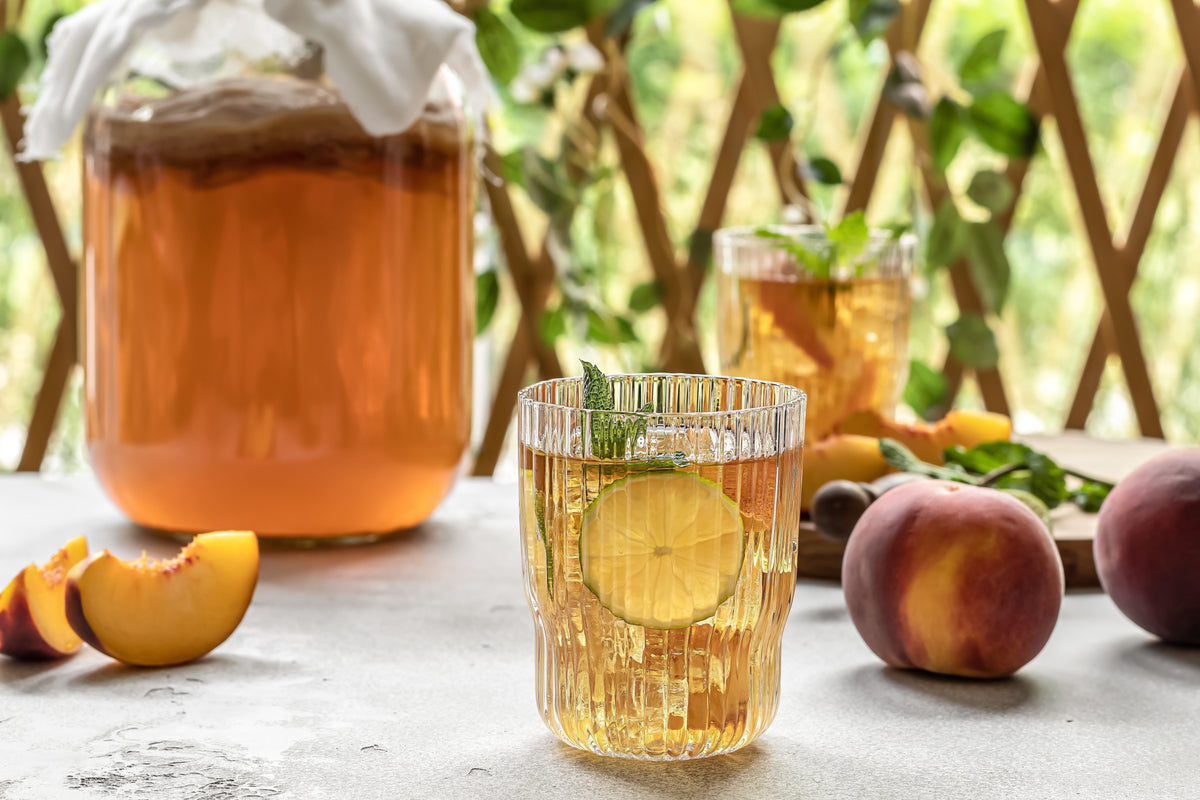
kombucha vessel with scoby carafe and glass with kombucha wooden board countertop loose tea

Kombucha: Effect on glucose metabolism

Kombucha can stimulate carbohydrate metabolism and thus support normal blood sugar levels. A comparison of several studies showed that the consumption of black tea, as well as green tea, has a blood sugar-lowering effect and can therefore reduce the general risk of diabetes. Derived from this, kombucha has an effect on glucose uptake, regardless of the tea it contains.

Tip: Kombucha made from green or black tea has a positive effect on glucose uptake and blood sugar levels. Thus, kombucha can reduce the risk of diabetes. Kombucha made from green tea can even more effectively improve blood sugar levels. It also improves liver and kidney values.

Conclusion: It is certain that unpasteurized kombucha, despite the sugar remaining after fermentation and due to the high amount of nutrients, can do a lot for our immune system through its positive effect on our microbiome and through basic metabolism. It is definitely advisable to include the fermented tea drink as a preventive measure against diabetes in your daily diet. Diabetics, therefore, do not have to forgo the delicious refreshing drink kombucha, taking into account the BE to be calculated.

Please ask a nutritionist or doctor if you are unsure how much kombucha per day is good for you and always pay attention to the sugar content when buying kombucha. The amounts can vary greatly depending on the manufacturer.

FAQs

What exactly is Kombucha?

Kombucha is a fermented drink made with the help of a culture (tea fungus).

The so-called tea fungus consists of various microorganisms, bacterial and yeast cultures. It transforms tea and sugar into a healthy refreshing drink. During the fermentation process, bacterial cultures and yeasts metabolize the sweetened tea into valuable vitamins, organic acids, dextrorotatory lactic acid bacteria, and enzymes, among other things. This creates the distinctive sweet-sour taste and sparkling natural carbonation.

The fermented drink has a long tradition. Hundreds of years ago, kombucha was valued in Asia and Eastern Europe for its healthy effects as an elixir of life and health giver.

How does kombucha taste?

Kombucha takes on different flavors depending on its production, processing, and added ingredients. A raw kombucha, which has not been pasteurized, tastes sweet and sour, somewhat more tart than conventional lemonades, and very refreshing.

The type of tea used in production plays a major role in the development of the taste and leads to a more or less intense kombucha. The sugar source used in fermentation also plays a decisive role.

By adding various fruit juices, the kombucha flavor can be changed at will during secondary fermentation.

Our kombucha varieties surprise with a variety of flavors from sweet-sour to ginger-spicy to fruity and exotic.

How much sugar does Kombucha contain?

The sugar content varies depending on the manufacturer. Each variety of our kombucha contains 3g of sugar per 100ml. Kombucha needs carbohydrates for fermentation. Our organic kombucha is fermented to contain as little sugar as possible (up to 50% less than comparable products and up to 80% less than common lemonades), and it is unpasteurized. This means it contains many nutrients, such as vitamins, healthy yeasts, and microorganisms for you, and it also tastes delicious. If we were to ferment our kombucha until it contained no sugar, it would be too unpalatable as a refreshing drink.

What ingredients does Kombucha have?

Bacterial and yeast strains: Acetobacter xylinum, Acetobacter oxydans, Gluconobacter oxydans, Gluconobacter xylinus, Saccharomyces apiculatus, Saccharomyces cerevisiae (baker's yeast), Saccharomyces ludwigii, Schizosaccharomyces pombe

Vitamins: Vitamin B1, B2, B3, B6, B12, Vitamin C, Vitamin D, Vitamin E, Vitamin K, Folic acid

Organic acids: Malic acid, Succinic acid, Acetic acid, Folic acid, Glucuronic acid, Gluconic acid, Malonic acid, Lactic acid, Dextrorotatory (L+) lactic acid, Oxalic acid, Usnic acid, Citric acid

Trace elements and minerals: Iron, Magnesium, Sodium, Potassium, Calcium, Cobalt, Zinc

Secondary plant compounds: Flavones, Isoflavonoids, Polyphenols

Enzymes, amino acids and tannins: including 14 different amino acids

Good health!

1 comment

    • Valverde Daniel
    • October 15, 2024 at 10:42 am

    Bonjour, je suis DT2, quelle est la quantité à boire par jour? Le matin à jeun, es ce bon? Où peut on acheter le Kombucha et la cure doit durer combien de temps ? Merci beaucoup pour votre réponse. Je suis sous insuline et metformine 1000mg/jour le midi . Cordialement.

Leave a comment

Please note, comments need to be approved before they are published.

This site is protected by hCaptcha and the hCaptcha Privacy Policy and Terms of Service apply.

Note: This article is intended for informational purposes only and should not be construed as professional analysis, advice, or medical information. It contains the author's personal opinion based on researched literature and personal experience on the subject.

Recommended articles for you

You can find more of my articles, from A, like non-alcoholic kombucha cocktails, to Z, like lemon-ginger kombucha, on our Kombuchery blog. Let's learn more about kombucha together!

View all

Kombucha Guide Berlin: Die 10 besten Cafés & Restaurants in 5 Bezirken

Kombucha Guide Berlin: The 10 Best Cafes & Restaurants in 5 Districts

Urban Wellness in Berlin: 5 Neighborhoods Where You'll Find Great Kombucha Berlin is one of Europe's most exciting cities when it comes to modern food and drink culture. Kombucha is no longer a niche product here, but part of a...

Read moreabout Kombucha Guide Berlin: The 10 Best Cafes & Restaurants in 5 Districts

Wer kann mehr? Der Vergleich: Kombucha, Brottrunk & funktionale Limonaden

Who Can Do More? The Comparison: Kombucha, Brottrunk & Functional Lemonades

In recent years, the range of beverages available has changed significantly. In addition to classic soft drinks, more and more fermented beverages and so-called functional lemonades are available in supermarkets today. Particularly popular are kombucha, kvass, and modern lemonades with...

Read moreabout Who Can Do More? The Comparison: Kombucha, Brottrunk & Functional Lemonades

Kombucha und seine Wirkung: Wissenschaftliche Studien zu Inhaltsstoffen, Fermentation und Gesundheit

Kombucha and Its Effects: Scientific Studies on Ingredients, Fermentation, and Health

Kombucha is one of the most intensively researched fermented beverages in recent years. Modern microbiological, nutritional, and clinical studies show that the drink possesses an exceptionally complex biochemical composition. During fermentation, numerous bioactive compounds are formed, including organic acids, polyphenols,...

Read moreabout Kombucha and Its Effects: Scientific Studies on Ingredients, Fermentation, and Health

🌍 World Kombucha Day am 21. Februar: Geschichte, Fakten & Tipps zum Feiern

🌍 World Kombucha Day on February 21: History, Facts & Tips for Celebrating

Celebrate the Effervescent History of Kombucha Every year on February 21st, kombucha fans worldwide celebrate World Kombucha Day. But why exactly does this day exist? It's simple: it's a tribute to a beverage that has delighted, inspired, and refreshed people...

Read moreabout 🌍 World Kombucha Day on February 21: History, Facts & Tips for Celebrating

Die besten Nahrungsergänzungsmittel: Gesundheit gezielt stärken ohne Risiko

The Best Nutritional Supplements: Targeted Health Boosts Without Risk

Dietary Supplements: Beneficial for all who can't live perfectly healthy every day In a stressful everyday life, many people can't always manage to eat optimally healthy every day. Shift work, long days in the office, little time for fresh cooking,...

Read moreabout The Best Nutritional Supplements: Targeted Health Boosts Without Risk

Darmkuren im Check: Was wirklich wirkt

Bowel Cleanses Under Scrutiny: What Really Works

Colon cleanses, detox programs, and so-called "bowel purifications" have enjoyed great popularity for years. They promise a fresh start for the body, more energy, better digestion, and increased well-being. Especially in the context of gut health, such promises seem plausible...

Read moreabout Bowel Cleanses Under Scrutiny: What Really Works

Präbiotische/ probiotische Hautpflege: Hilft sie wirklich?

Prebiotic/probiotic skincare: Does it really work?

Prebiotic and Probiotic Skincare: Trend or Scientifically Effective? The Skin Microbiome: A Complex Ecosystem The skin is the largest human organ and a complex ecosystem inhabited by a multitude of microorganisms, collectively known as the skin microbiome. This consists of...

Read moreabout Prebiotic/probiotic skincare: Does it really work?

Wozu braucht der Körper Präbiotika?

Why does the body need prebiotics?

Prebiotics are often overshadowed by their more well-known "relatives," probiotics. While probiotics are living microorganisms that we ingest through food or supplements, prebiotics serve as food for the beneficial bacteria in the gut. They are, so to speak, the fuel...

Read moreabout Why does the body need prebiotics?

Wie viel Kombucha ist gut für dich?

How much kombucha is good for you?

How much kombucha is good for me? Our tips on dosage, duration of use and what your body really needs Kombucha is more than just a trendy drink - it's alive, naturally fermented, and packed with microorganisms. But how much...

Read moreabout How much kombucha is good for you?

Neue Rezeptur mit Vitamin C aus Acerola: *Vitamin C trägt zu einer normalen Funktion des Immunsystems, einem normalen Energiestoffwechsel sowie zum Schutz der Zellen vor oxidativem Stress bei.
  • Vitamin C contributes to the normal function of the immune system.
  • Vitamin C contributes to normal psychological function.
  • Vitamin C contributes to normal energy-yielding metabolism.
  • Vitamin C contributes to the reduction of tiredness and fatigue.
  • Vitamin C contributes to the normal functioning of the nervous system.
  • Vitamin C contributes to the protection of cells from oxidative stress.
  • Vitamin C contributes to the regeneration of the reduced form of vitamin E.
  • Vitamin C contributes to normal collagen formation for the normal function of the skin.
  • Vitamin C contributes to normal collagen formation for the normal function of blood vessels.
  • Vitamin C contributes to normal collagen formation for the normal function of bones, cartilage, teeth and gums.
  • Vitamin C increases iron absorption.