

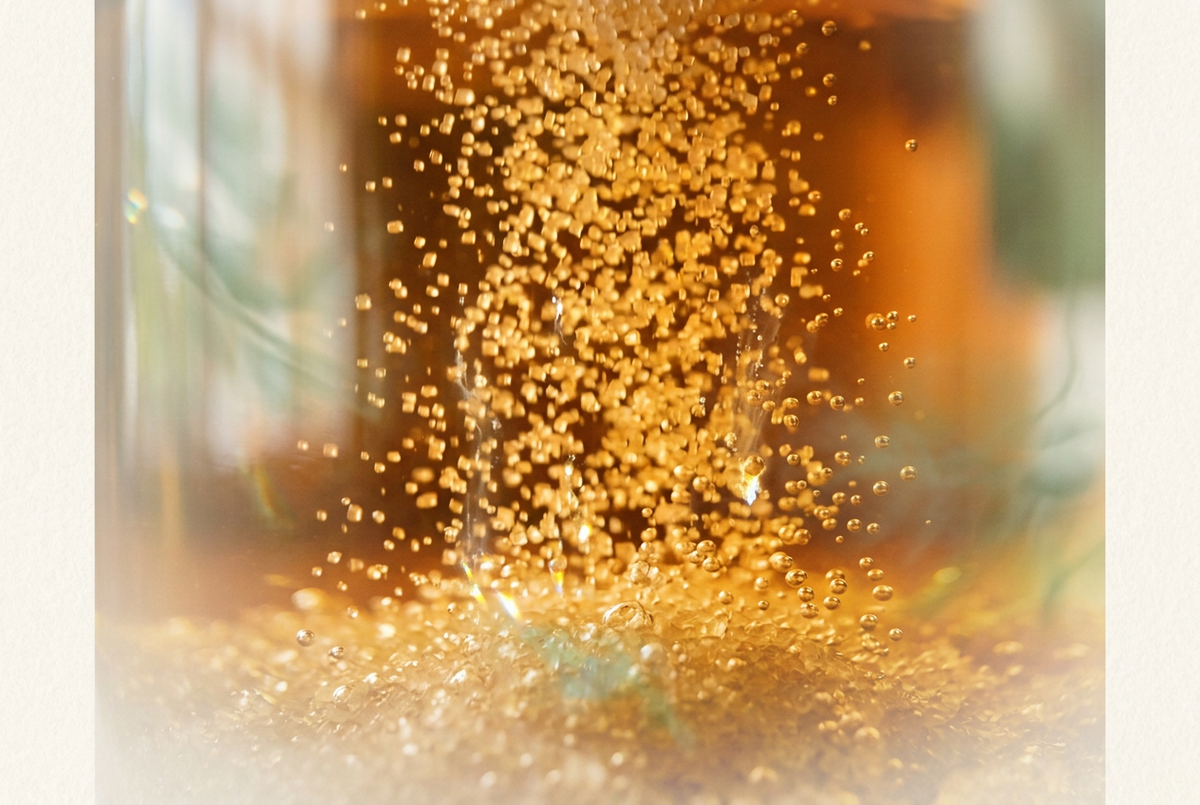

You may have already wondered: Why does kombucha contain sugar even though it is fermented? After all, some of the sugar is converted by yeasts and bacteria during fermentation. But it doesn't have to disappear completely.
In this article, you will learn why sugar plays a role in the production of kombucha, what happens during fermentation, and why the finished drink may still contain sugar.
Why is sugar added to kombucha in the first place?
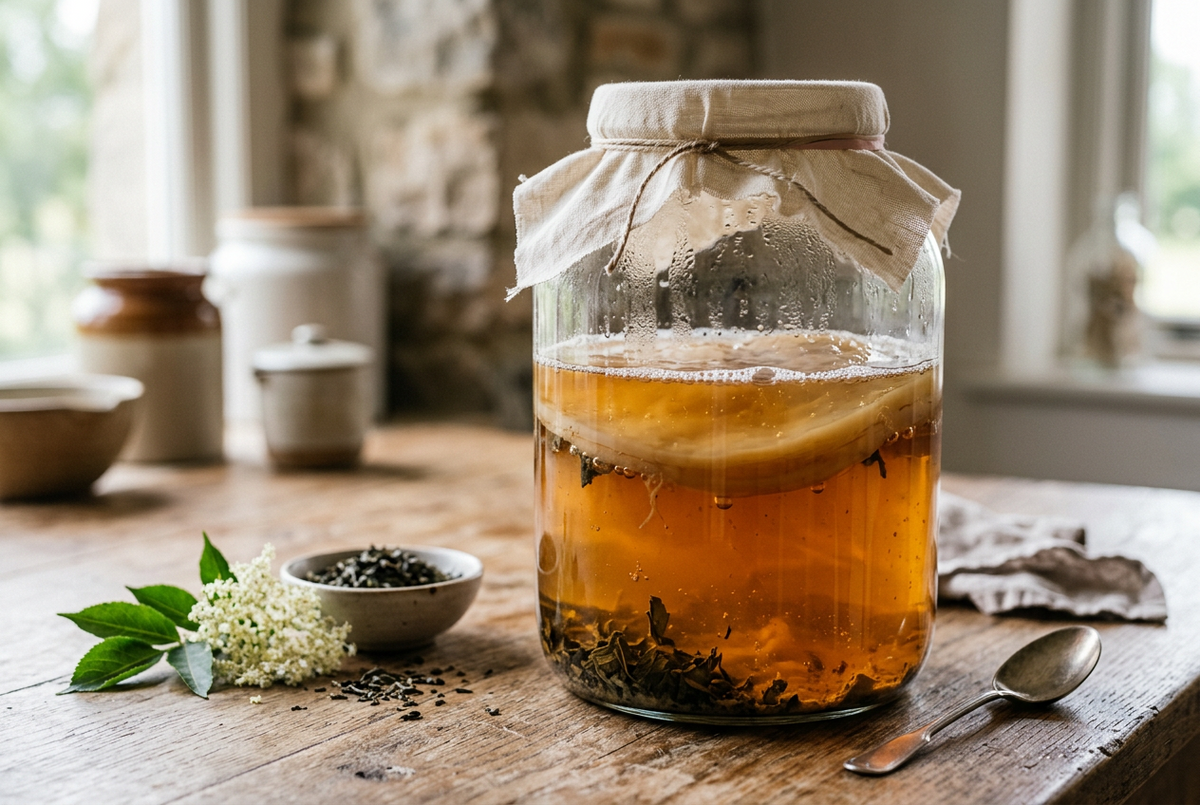
Kombucha is traditionally made from sweetened tea, which is fermented using a culture of yeasts and bacteria. This culture is often referred to as a SCOBY. The added sugar serves as a starting material for various metabolic processes carried out by the microorganisms during fermentation.
Without a suitable nutrient base, fermentation does not occur in the same way. That is why sugar is one of the important ingredients in traditional production.
So sugar is not simply there to make the drink sweet. It is also needed for the fermentation process. How much of it remains in the kombucha at the end depends on various factors.
What happens to the sugar during fermentation?
During fermentation, yeasts and bacteria work together. In the process, some of the originally added sugar is converted. What substances are produced and how much sugar remains depends on several factors, including the culture and the fermentation conditions.
1. Sugar is broken down into smaller components
In traditional production, household sugar, or sucrose, is broken down into glucose and fructose by enzymes. The microorganisms can further process these types of sugar in different ways.
2. Yeasts and bacteria convert sugar
Yeasts can convert sugar into substances such as alcohol and carbon dioxide. Certain bacteria, in turn, use the substances produced, such as alcohol, to form organic acids. Other metabolic products are also produced during this process.
3. Some of the sugar remains
The microorganisms do not necessarily convert all the sugar. Therefore, the finished drink may still contain various types of sugar. This remaining sugar is also referred to as residual sugar.
This means that fermentation changes the composition of the drink, but does not automatically make kombucha a sugar-free drink.
Why does the finished kombucha still contain sugar?
It is not possible to give a blanket answer as to how much sugar remains after fermentation for every kombucha. The composition can vary depending on the recipe and manufacturing process.
The most important influencing factors include:
- The initial amount of sugar: Depending on how much sugar is added at the beginning, the microorganisms have different amounts of starting material available.
- The duration of fermentation: During fermentation, the sugar content changes. However, the duration alone does not determine how much sugar remains at the end.
- The composition of the culture: Different yeasts and bacteria can process sugar and other substances differently.
- The temperature and other conditions: The conditions during fermentation influence the activity of the microorganisms.
- The recipe: Other ingredients, such as fruit juice, can also add sugar to the drink.
This is why two kombucha products may differ in sugar content even if both have been fermented.
Does kombucha become sugar-free with longer fermentation?
Not necessarily. During fermentation, the sugar content may decrease because microorganisms convert some of the sugar. However, this does not mean that kombucha fermented for longer is automatically sugar-free.
Fermentation depends on several factors. Furthermore, a more tart taste does not necessarily mean that no sugar is left. Acidity and residual sugar can occur in the drink at the same time.
If you want to know how much sugar a particular kombucha contains, the nutritional table of the respective product is therefore the best guide.
Does kombucha taste sour despite the residual sugar?
Yes, that is possible. The typical taste of kombucha is created by the interplay of various components, including residual sugar and organic acids formed during fermentation.
Residual sugar can contribute a sweet note, while organic acids are responsible for the tart taste. Depending on the composition, kombucha can therefore taste sweet and tart, fruity, or distinctly tart.
How sweet or tart you perceive a drink cannot be determined by the sugar content alone. Acidity and the other components also influence the taste.
How can you identify the sugar content of kombucha?
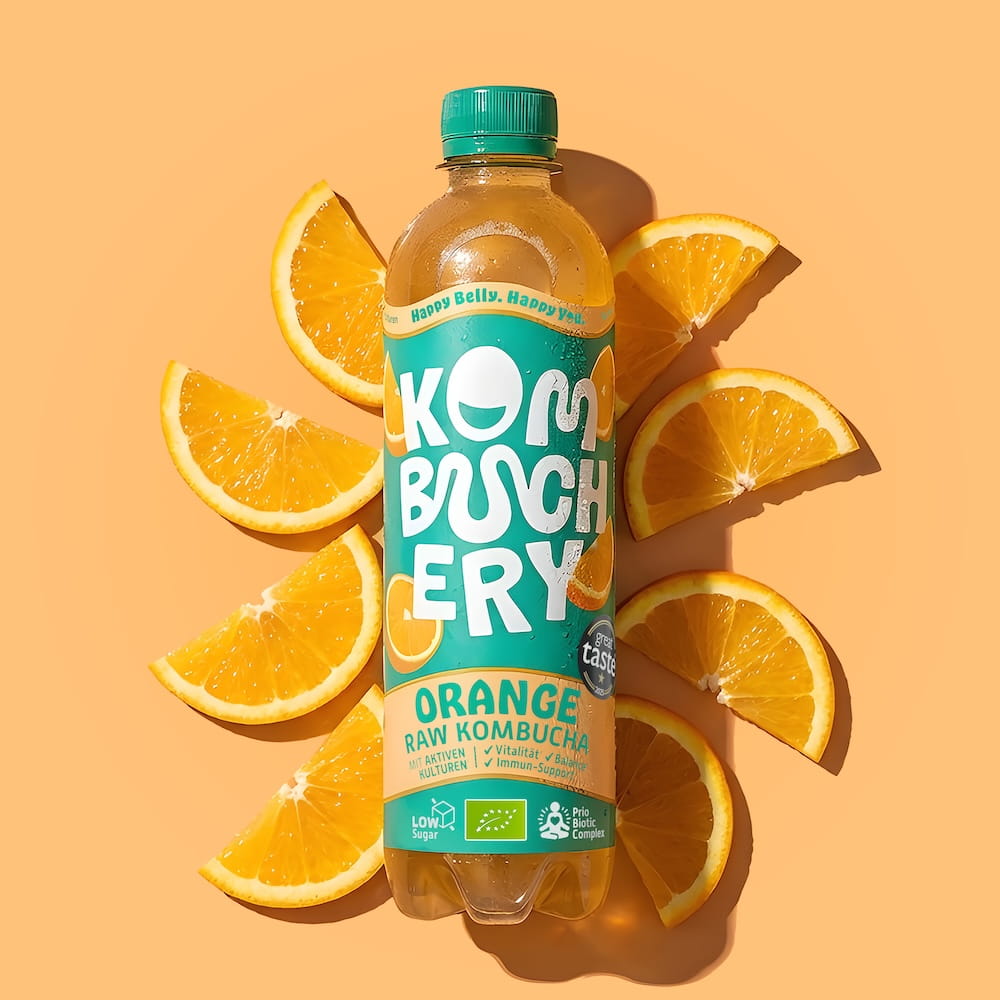
If you try or compare different kombucha varieties, it is worth taking a look at the nutritional information. There you will find the stated sugar content per 100 ml and can compare the values of different products on the same basis.
These three points will help you:
- Sugar per 100 ml: This allows you to directly compare the nutritional information of different drinks.
- Portion size: If you want to know how much sugar you consume with one bottle, also consider the amount you drink.
- Ingredients list: It gives you an overview of which ingredients were used in the production.
It is important to distinguish between the sugar added at the beginning of production and the sugar that is still contained in the finished drink. For consumption, the declared nutritional value of the finished product is decisive.
Is sugar-free kombucha even possible?
Sugar is added for fermentation in traditionally produced kombucha. Whether the finished drink still contains sugar and in what quantity depends on the manufacturing process and the recipe.
Therefore, a completely sugar-free end product cannot be inferred solely from the fact that a drink has been fermented. You should also pay attention to the specific nutritional information for products with a very low sugar content.
If you are specifically looking for a drink with little or no sugar, use the nutritional table as a guide and check the information provided by the respective manufacturer.
Conclusion: Fermented does not automatically mean sugar-free
Why does kombucha contain sugar even though it is fermented? Because sugar serves as a starting material for fermentation in traditional production and is only partially converted by yeasts and bacteria.
How much sugar remains in the finished drink depends on various factors, including the recipe, the culture, and the fermentation conditions. Taste and acidity alone do not reliably reveal how high the sugar content is.
If you want to know exactly, take a look at the nutritional information of the respective product. This will help you better assess the sugar content and compare different drinks based on their actual values.
Frequently asked questions about sugar in kombucha
Why is sugar added to kombucha?
In traditional production, sugar serves as a starting material for fermentation for the yeasts and bacteria. Some of it is converted during this process.
Is kombucha sugar-free after fermentation?
No, not automatically. Sugar can remain in the drink even after fermentation. How much is contained depends on the recipe and the manufacturing conditions.
Does the sugar content always decrease during fermentation?
Sugar is converted by microorganisms during fermentation. However, the actual course depends on various conditions. The final sugar content cannot be reliably inferred from the fermentation duration alone.
Why does kombucha taste sour even though it contains sugar?
During fermentation, organic acids are produced, among other things. These can combine with the remaining sugar to create a sweet and tart taste.
Does homemade kombucha contain less sugar than store-bought kombucha?
This cannot be stated as a general rule. The sugar content depends on the recipe, the ingredients, and the fermentation process. Concrete nutritional data are required for a reliable comparison.
How much sugar does kombucha contain per 100 ml?
The sugar content varies depending on the product. The nutritional table on the packaging states how much sugar is contained per 100 ml.
Can I tell the sugar in kombucha by its taste?
Only to a limited extent. The taste is influenced by residual sugar as well as by acids and other components. For an accurate assessment, you should refer to the nutritional information.






Share: