

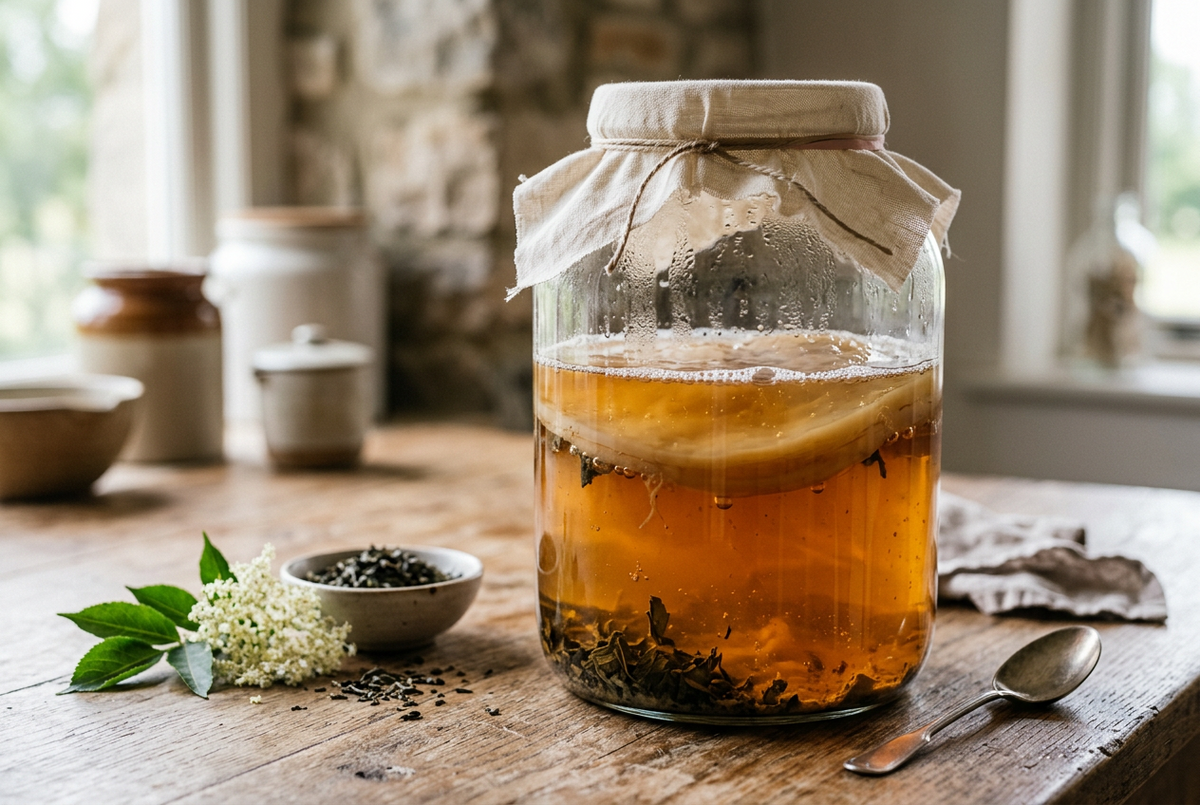

You've heard of raw kombucha before, but you're not sure what it is? Then you've come to the right place! There is an important difference when it comes to kombucha: some varieties are pasteurized after fermentation, while others remain raw. This can affect the microorganisms contained in the drink and its character.
In this article, you'll learn what raw kombucha means, how it differs from pasteurized kombucha, and what to look for when buying it.
What is raw kombucha?
Raw kombucha is kombucha that has not been pasteurized. This means that the fermented tea drink is not pasteurized after production. Pasteurization involves briefly heating food to kill or reduce microorganisms and extend its shelf life.
Raw kombucha, on the other hand, remains untreated in terms of heat treatment. This means that the live microorganisms created during fermentation can be preserved in the finished drink.
Like classic kombucha, it is made from sweetened tea fermented with a culture of yeast and bacteria. During this process, organic acids, carbon dioxide, and small amounts of alcohol are produced, among other things. The result is a refreshing drink with a characteristically sweet and tart taste.
It's important to know: the term "raw" primarily describes the processing. How many live cultures a drink contains depends on several factors, including the recipe and production process.
What is pasteurized kombucha?
Pasteurized kombucha is deliberately heated after fermentation. This heat treatment largely inactivates or kills the live microorganisms.
The advantage: pasteurization can help make the product last longer and reduce microbial changes during storage. At the same time, pasteurized kombucha differs from raw kombucha in one important way: the live microorganisms from the fermentation are not preserved in the same way.
Pasteurized kombucha is therefore not necessarily worse. What matters is what you want in a drink: a longer shelf life thanks to heat treatment or an unpasteurized product with live cultures.
Raw kombucha vs. pasteurized kombucha: the differences
Both drinks are made from fermented tea. The key difference lies in how they are treated after fermentation.
| Feature | Raw kombucha | Pasteurized kombucha |
|---|---|---|
| Pasteurization | No | Yes |
| Live microorganisms | May be preserved in the drink | Largely inactivated or killed by heat treatment |
| Taste | May change due to active fermentation and storage | May differ due to heat treatment |
| Shelf life | Depends on the production process and storage conditions | Often extended by pasteurization |
| Storage | Depends on the product | Depends on the product |
Good to know: Not all raw kombucha needs to be refrigerated, and not all pasteurized products are necessarily shelf-stable at room temperature. What matters are the production process, shelf-life testing, and the manufacturer's storage instructions.
Why are live cultures preserved in raw kombucha?
Fermentation is at the heart of kombucha. Yeast and bacteria work together to convert components of the sweetened tea into various metabolic products. These include organic acids, which give the drink its characteristic taste.
If kombucha is not pasteurized after fermentation, live microorganisms can be preserved in the drink. Heat treatment inactivates or kills most of them.
However, the term "raw" alone does not indicate how many cultures are actually in the bottle. This depends on the cultures used, the production process, and the storage conditions.
Does raw kombucha taste different?
It can! Raw kombucha can have a lively, subtly tart taste that is fruity or bitter depending on the recipe. Because the microorganisms have not been inactivated by pasteurization, the drink can continue to change during storage.
How noticeable the difference is depends on several factors:
- Type of tea: Green and black teas have different aromas.
- Fermentation: The duration and conditions affect the acidity, sweetness, and taste.
- Ingredients: Fruit, spices, and other ingredients give kombucha its unique character.
- Production and storage: These affect how the aroma develops after bottling.
Whether raw or pasteurized, what matters in the end is which taste you prefer.
How can you identify genuine raw kombucha?
Looking to buy raw kombucha? These tips will help you make the right choice:
- Check the labeling: Terms such as "raw" or "unpasteurized" indicate how the product has been processed.
- Check the manufacturer's information: Find out whether the drink is heated after fermentation and whether it contains live cultures.
- Read the ingredients list: This will tell you which ingredients were used and how much sugar the drink contains.
- Follow the storage instructions: Follow the information on the bottle. Some raw kombucha products must be refrigerated, while others are shelf-stable at room temperature when unopened.
By the way, a cloudy appearance or visible sediment is not reliable evidence that kombucha is unpasteurized. What matters are the manufacturer's statements and the actual production process.
Raw kombucha from Kombuchery: fermentation that stays in the bottle
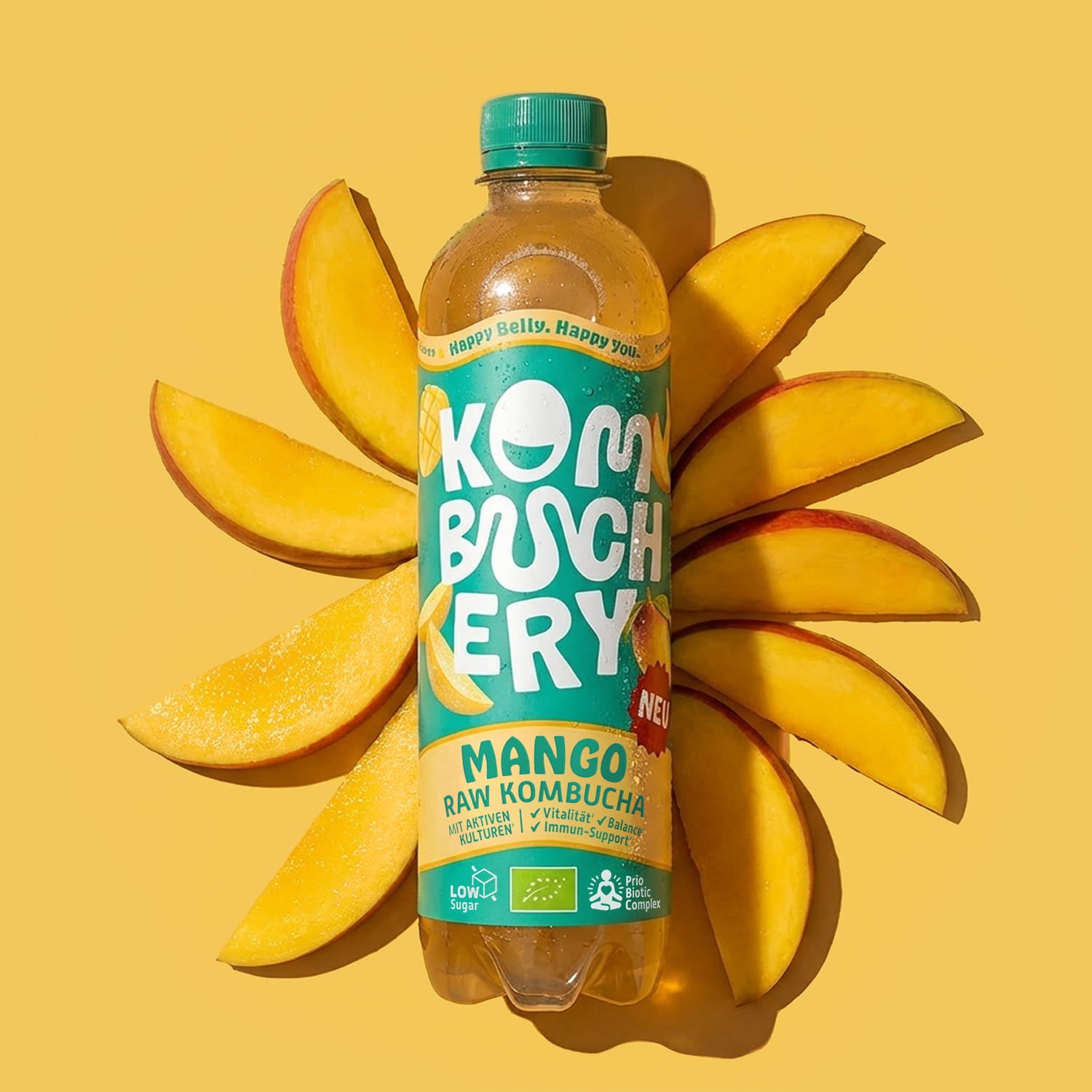
At Kombuchery, we use genuine raw kombucha: our drink is fermented and not pasteurized after fermentation. This preserves active cultures in the finished kombucha.
It is made from organic sencha green tea. We combine traditional fermentation with our own approach to raw kombucha using our specially developed PrioBiotic Complex and a controlled production process.
Another advantage: our bottles do not need to be refrigerated when unopened. Once opened, the kombucha should be stored in the refrigerator and enjoyed soon. Always follow the storage instructions on the packaging.
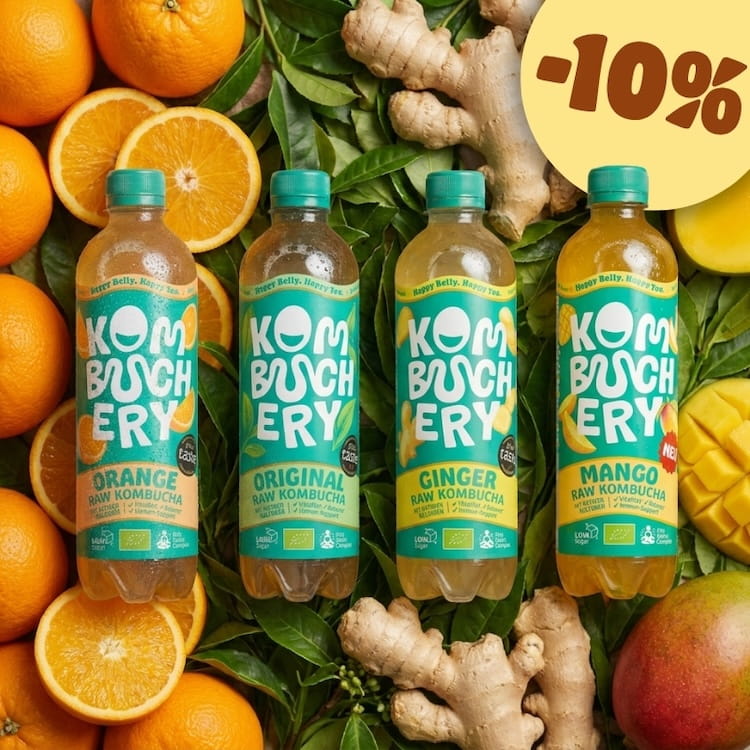
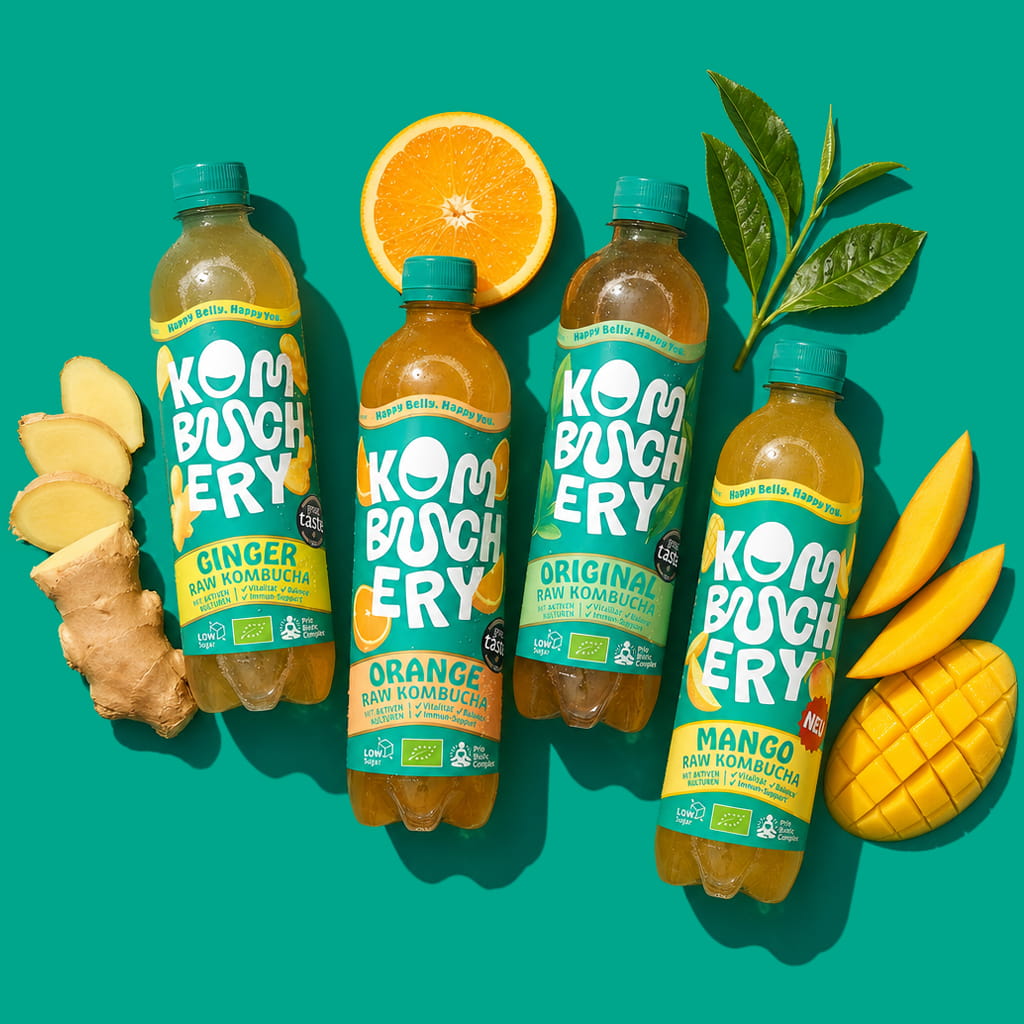
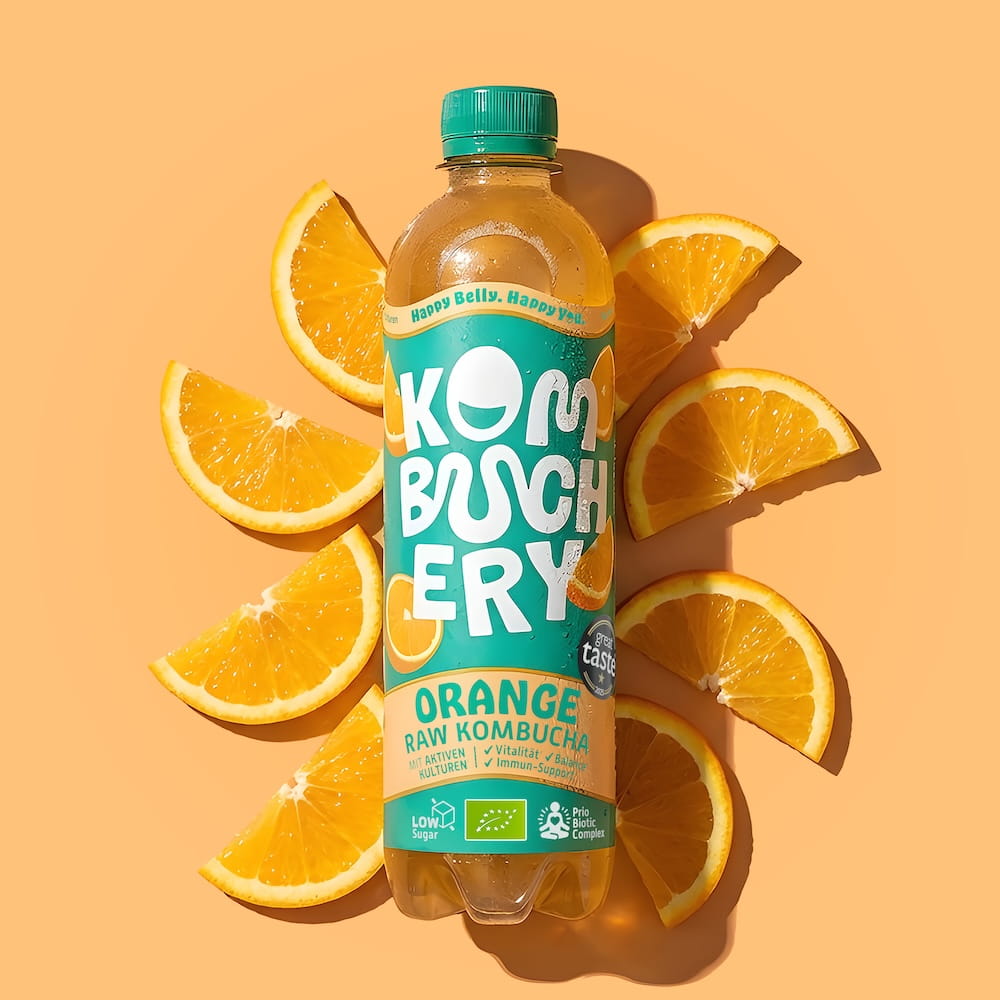
Whether enjoyed on its own, as a refreshing drink between meals, or as an alcohol-free alternative for special occasions, discover our Original, Ginger, and Orange kombucha varieties and find your favorite.
Conclusion: raw or pasteurized – which is right for you?
The most important difference between raw kombucha and pasteurized kombucha is the heat treatment after fermentation. While heat treatment largely inactivates or kills the live microorganisms in pasteurized kombucha, they can be preserved in raw kombucha.
If you are looking for an unpasteurized drink with live cultures, raw kombucha is an interesting choice. When buying, pay attention to the labeling, ingredients, and storage instructions – and above all, to a taste that suits you.
Frequently asked questions about raw kombucha
What does raw kombucha mean?
Raw kombucha is kombucha that has not been pasteurized. The drink is not pasteurized with heat treatment after fermentation, so live microorganisms can be preserved.
What is the difference between raw kombucha and regular kombucha?
The term kombucha refers to the fermented tea drink. Raw kombucha is an unpasteurized variety. Other kombucha products may be pasteurized after fermentation.
Does raw kombucha contain live cultures?
Yes, raw kombucha can contain live microorganisms from the fermentation. The exact amount depends on the product, production process, and storage conditions.
Does raw kombucha need to be stored in the refrigerator?
This depends on the product and its production process. Some raw kombucha varieties must be refrigerated, while others are shelf-stable at room temperature when unopened. After opening, kombucha should be refrigerated and consumed promptly according to the manufacturer's instructions.
Is raw kombucha sugar-free?
No, not necessarily. During fermentation, the microorganisms convert some of the added sugar. How much sugar remains in the finished drink depends on several factors, including the recipe and fermentation time. Check the nutritional information on the bottle.




Share: